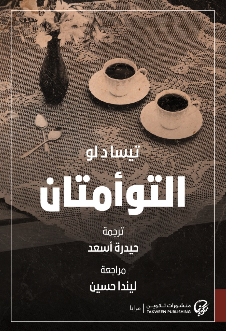
The Twins
The Twins
🔥 Limited stock – last few copies remaining⚡ This book is currently in high demand
✔️ Fast delivery within the UAE within 24–48 hours✔️ Free shipping on orders over 150 AED✔️ Secure payment via Tap Payments✔️ 100% authentic books from official publishers
If the product is out of stock, a full refund will be issued via the same payment method
🔥 Hurry Up – Only Few Copies Left!
Couldn't load pickup availability
🚚 Fast Delivery via Aramex – Only 21 AED
Why buy from International Group Book?✔️ Fast delivery within the UAE and GCC✔️ Free shipping within the UAE for orders over AED 150✔️ Authentic books from official publishers✔️ Secure payment via Tap Payments, Visa, and Mastercard✔️ Reliable store and fast customer service
📦 Add one more book to save more on shipping📚 Add another book to save more on shipping costs
📦 International Shipping Notice:Customs duties or import taxes may apply depending on the destination country and are payable upon delivery.--------------------📦 International Shipping Notice:Customs duties or import taxes may apply depending on the destination country and are payable upon delivery.
When «The Twins» was published in 1993, nearly five decades had passed since the end of World War II, and Europe was still living, in one way or another, with the shock of that war and its aftermath, amid a consensus that Germany and its people bore the moral burden and responsibility for the consequences of this war. Germany had assumed this role, especially since it was the defeated party, while the rest of the European countries crafted their own narrative, in which they appeared as innocent of this catastrophe as a wolf of Joseph’s blood.
This agreed-upon formula may well have been a unique form in history, in which wars have long been told from at least two perspectives. In such an atmosphere of moral and historical consensus, the narrative of «The Twins» came like a stone thrown into the waters of the European narrative; in her novel, Tessa de Lo made space to depict the circumstances under which Nazism rose and Hitler came to dominate the German political scene, and the effects of that era and war on German society. Tessa de Lo told her story with a high moral sense and a critical eye that avoided any favoritism, daring to challenge established certainties: to see your enemy from another angle, other than the one all channels had sought to impose on anyone who wished to look at the past.
The publication of the novel provoked fierce reactions from reviewers and critics in her country, and some accused her of betraying her homeland when she gave the German—the enemy who occupied the Netherlands, humiliated its people, and exterminated the Jews—space to make his voice and suffering heard, and to appear as a victim of Nazism as well.
Linda Hussein
books
مشاركة